
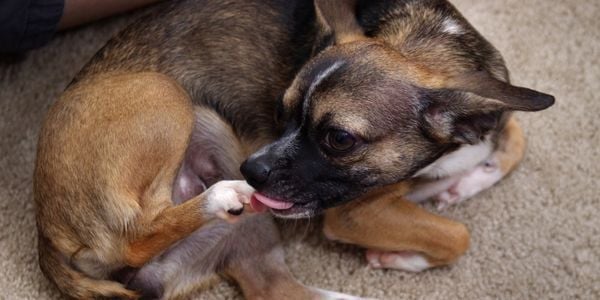
 Dogs lick themselves for many reasons that are totally normal. Grooming is part of keeping clean and a quick lick at a paw after coming inside is not unusual. Some dogs even self-soothe with light licking before settling down to rest.
But when licking becomes frequent, focused, intense, or repetitive, it can be a sign that something bigger is going on. In many cases, persistent licking and over-grooming are connected to pain. Because dogs cannot tell us what hurts, they often show us instead with subtle behavior changes.
If you've noticed your dog licking themselves more than usual, read on for tips on what to do and when to see your veterinarian.
Table of Contents

Why Dogs Lick Themselves
Licking can temporarily relieve discomfort. The repetitive motion releases calming chemicals in the brain and provides mild distraction from pain, similar to what we humans do when we rub a sore spot on our body. Dog saliva also contains enzymes that can kill some types of bacteria (but their saliva also contains other types of bacteria, so it's not quite the best healing agent).
Dogs can lick because of:
- Joint pain or arthritis
- Muscle strain
- Injury or bruising
- Nerve discomfort
- Dental pain
- Abdominal or gut discomfort
- Itchy and painful skin due to skin infections
- Skin irritation that is secondary to underlying pain
For example, a dog with hip discomfort may repeatedly lick at their flank, thigh, or lower back. A dog with wrist or elbow pain may focus on a front leg. Sometimes the licking happens directly over the painful area. Other times, it shows up nearby or even on a different limb due to referred pain. In chronic cases, repetitive licking can develop into a condition called a lick granuloma, where the skin becomes thickened, inflamed, and difficult to heal.
Dogs might be licking for reasons unrelated to pain, such as boredom or anxiety. Licking is a self-soothing behavior because of how repetitive it is. However, if you're noticing that it's happening more than usual or always after specific experiences, it's important to address that potential stress rather than let your dog try and work through any anxiety alone.

When Licking Becomes a Problem
Not all licking signals pain. The key is noticing patterns and changes. Concerning signs include:
- Licking one specific area repeatedly or daily
- Licking that interrupts sleep or normal activity
- Hair thinning, redness, or thickened skin in one spot
- Moist, irritated, or oozing areas on the legs or body (also known as "hot spots")
- Increased licking along with stiffness, slowing down, or mobility changes
- Licking paired with behavior changes such as irritability or withdrawal
Pay attention to timing. Does the licking increase after exercise? After getting up from rest? After eating a meal? At night? Patterns like these can provide important clues for your veterinarian.
It is also important to consider whether other pain-related signs are present. Subtle shifts in posture, difficulty jumping, changes in appetite, or sensitivity to touch may all connect back to discomfort. Learn about more symptoms of pain in dogs here.
How to Support Your Dog at Home
If you notice new or increasing licking, start by observing rather than immediately trying to stop the behavior. The licking itself may be a symptom, not the root problem.
You can provide supportive orthopedic bedding to reduce pressure on joints and limit high-impact activity if you suspect soreness. Gently monitor the skin for redness or swelling and take short videos of the behavior to show your veterinarian.
If your dog's skin is already irritated, your veterinarian may recommend protective measures such as a cone or recovery suit to prevent further damage while the underlying cause is addressed. Here are some tips for at-home care for hot spots.
Avoid using over-the-counter creams, essential oils, or human medications unless your veterinarian specifically recommends them for your dog. Some products can worsen irritation or be toxic if ingested.
Most importantly, do not assume it is “just behavioral” without ruling out medical causes first. Pain and dog anxiety can look similar on the surface, but they require very different approaches. A canine behavior consultant will always want to rule out medical issues before diving too deep into behavior plans, because these issues are so prevalent as part of why a behavior is happening.
When to See the Veterinarian
Schedule an appointment if:
- Licking is persistent, focused, or worsening
- The skin becomes raw, swollen, or infected
- Your dog shows mobility changes, stiffness, or reluctance to move
- You notice appetite, energy, or behavior shifts along with the licking
- The licking continues for more than a few days without improvement
If the area is bleeding, rapidly swelling, or your dog seems acutely painful, seek care right away at an urgent care clinic or animal emergency room.
Your veterinarian may recommend a physical exam, orthopedic evaluation, neurologic assessment, or additional diagnostics depending on what they find. Sometimes the cause is straightforward, such as arthritis. Other times, it may take a bit more investigation.
Take This Quiz to See if Your Dog is in Pain
Not sure if what you're seeing could be related to pain? Our Dog Pain Quiz can help you take a closer look. It walks you through subtle changes in behavior, mobility, and daily habits that sometimes signal discomfort in dogs. Your results can also be helpful to share with your veterinarian when discussing your dog's comfort and care.
Dogs are incredibly good at masking pain. Repetitive licking is often dismissed as boredom or anxiety, but it can be one of the body’s early warning signs. When you notice patterns early and connect with your vet, you'll give your dog the best chance at staying comfortable and mobile long term.